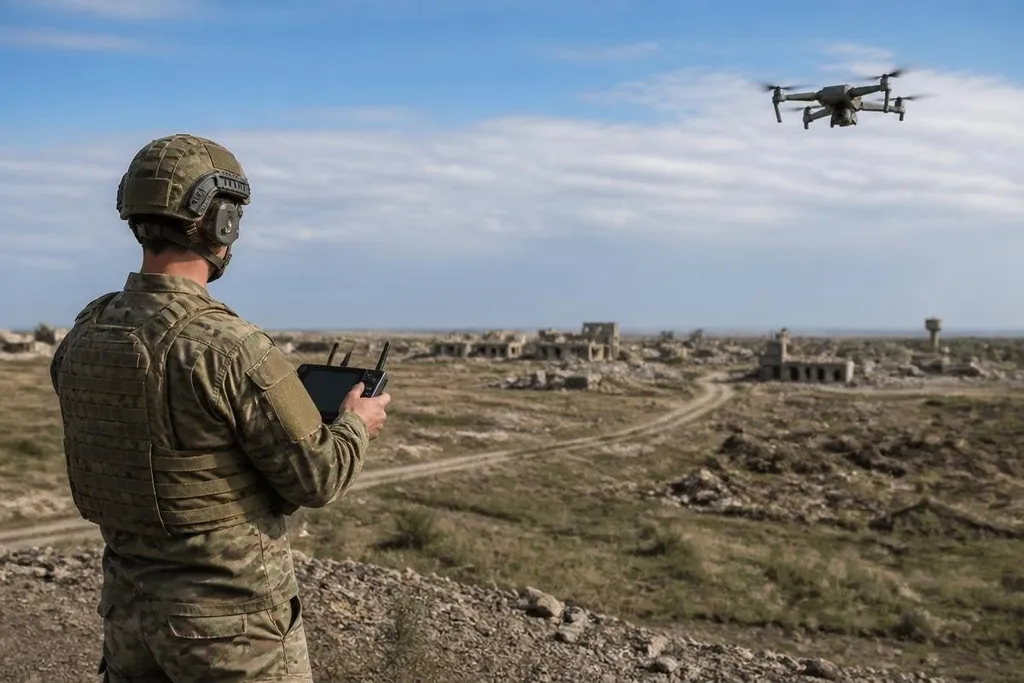
A defense drone can keep people away from a dangerous area while sending back images, location data, or other sensor readings. The same distance that protects an operator can also make mistakes harder to see and responsibility harder to assign.
- Drones can watch areas that are unsafe or difficult for people to reach.
- Jamming, weather, low batteries, and damaged links can stop a mission.
- Human control, clear rules, and strong recovery plans matter as much as the airframe.
What defense drones can do
The main benefit is separation. A drone can carry cameras and other sensors over terrain that may expose a crew to fire, unexploded weapons, chemical hazards, or difficult weather. It can send information back without placing an aircraft or ground team at the same location.
That information can support border patrol, search work after an attack, route checks, and damage assessment. A thermal camera may show heat sources at night, while a standard camera can record roads, buildings, and vehicle movement. The value depends on image quality, flight time, weather, and the team reading the data.
Some drones carry equipment rather than weapons. They may relay radio signals, map an area, drop small supplies, or help locate people. A drone with a communications relay can connect teams when hills or damaged buildings block direct radio contact. That makes the link between the aircraft and the ground as important as the aircraft itself.
Where the risks start
A drone can give an operator a view without giving them a complete view. Smoke, trees, buildings, darkness, and poor image quality can hide people or objects. A camera also records a moment, while a decision may depend on what happened before the image arrived.
The control link can fail. Radio jamming may block commands or video. Spoofing can feed false location data to the aircraft. A cyberattack may affect ground software, stored recordings, or access to the control station. Each failure needs a known response, such as returning to a set location, landing, or ending the flight.
Weather creates another limit. Wind, rain, dust, ice, and low temperatures can cut flight time or affect sensors. Batteries also give the aircraft a fixed window in the air. A mission that reaches an area safely may still fail if the drone cannot return with enough power.
Weapons and human decisions
Armed drones raise a separate set of questions. A person may approve an action from many miles away, using data that can be incomplete or out of date. That distance can reduce immediate danger to the operator, but it does not remove the need to confirm a target and assess nearby people.
Autonomous flight can reduce the workload of a crew by handling route changes or keeping the aircraft stable. An autonomous system still needs limits, testing, and a clear handoff to a person when the situation falls outside its design. No system should receive more authority than its sensors and control links can support.
The hardest issue is accountability. A useful operating record should show who gave an order, what data they saw, which system made a recommendation, and what happened after the decision. Without that record, investigators may struggle to separate a sensor error from a software fault or a human mistake.
That record also needs outside evidence: a dated account of the robot, its control system, the operator’s view, and the result. Defense robotics reporting can put those details beside claims about autonomy, so the next decision starts with what the system did rather than what its maker promised.
A practical decision check
Before buying, deploying, or approving a defense drone, a team should check the full system rather than the aircraft alone:
- Set the task: Define the area, sensor job, flight time, and decision the data must support.
- Test the link: Measure control and video performance around buildings, hills, and likely sources of radio interference.
- Plan failure: Write down what happens after lost signals, false location data, low battery, sensor faults, or a damaged airframe.
- Limit autonomy: State which actions software may take and which require a person to approve them.
- Record decisions: Keep flight data, operator actions, alerts, and system status for later review.
- Check the law: Match training, use, and records to the rules that apply in the operating area.
I’d treat any claim about a defense drone as incomplete until its failure modes and human controls are described. A flight video can show that an aircraft moved through the air; it cannot prove that the system will identify the right object, keep its link, or support a lawful decision under pressure.
The useful test is simple: ask what the drone can see, what it cannot see, what happens when the link fails, and who remains responsible when the system is wrong.